Blog Bathrooms
Bathroom Remodel Cost in LA 2026
Most full bathroom remodels in Los Angeles run $25,000–$45,000+ in 2026. Here's what moves the price up or down, how long it takes, and how to plan a budget that holds.
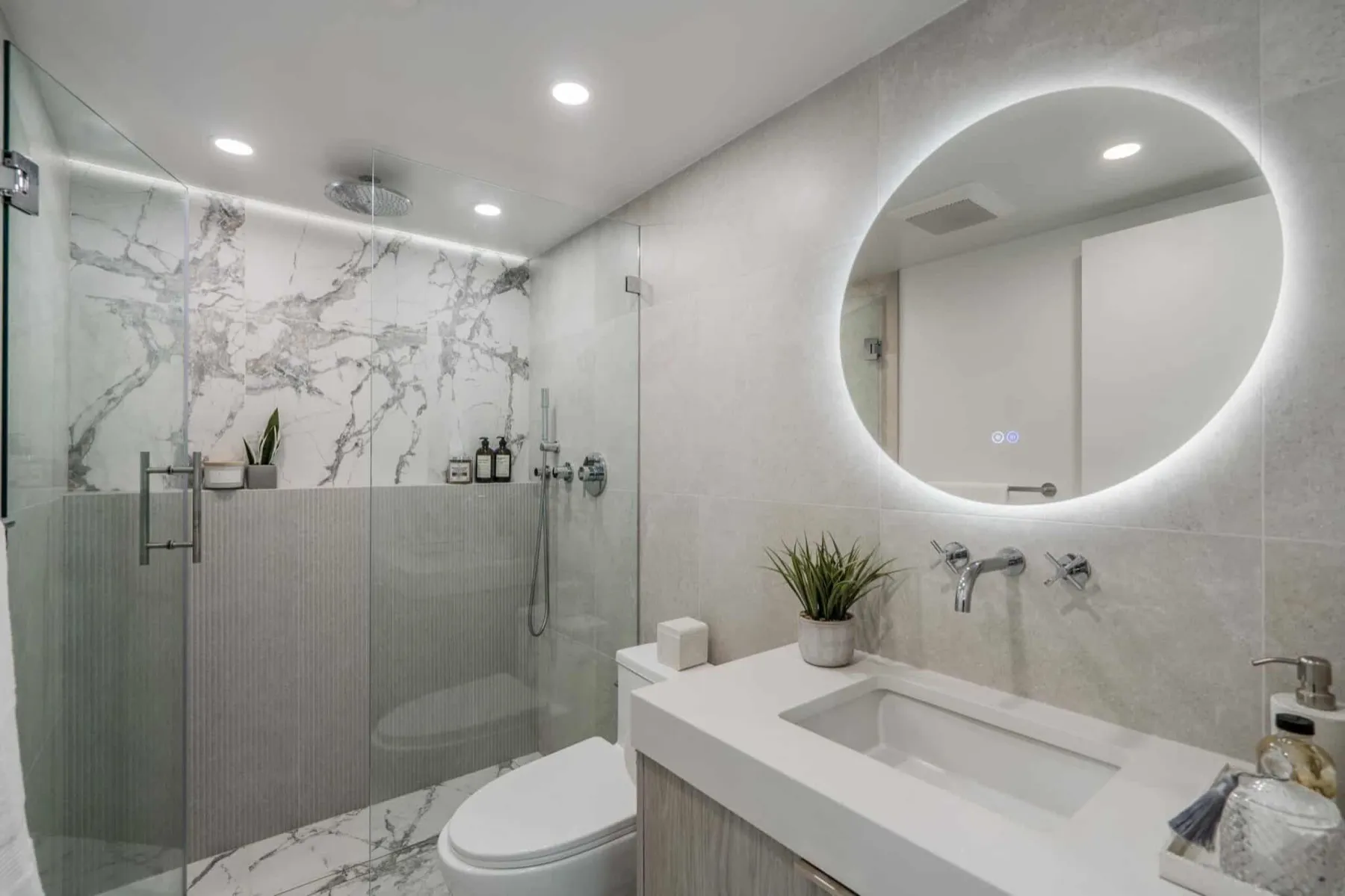
Key takeaways
- Typical range: most full bathroom remodels in LA and Orange County cost $25,000–$45,000+.
- Biggest cost drivers: moving plumbing, changing the layout, tile complexity and fixture choices.
- Timeline: plan on 2–4 weeks of design and permits, then about 4–6 weeks of construction.
- Cheap bids cost more later: skipped waterproofing and rushed work are the most common reasons bathrooms get torn out again.
A bathroom remodel is one of the most valuable upgrades you can make to a home. It changes how you start and end every day, and it’s one of the first rooms buyers look at.
It’s also one of the hardest rooms to price, because so much of the work happens behind the walls. This guide explains what bathroom remodels really cost in Los Angeles and Orange County in 2026, and what decides where your project lands.
What a bathroom remodel costs in 2026
Most full bathroom remodels in Southern California fall between $25,000 and $45,000+. Where yours lands depends mostly on how much of the room changes.
| Project level | Typical cost | What it usually includes |
|---|---|---|
| Refresh | Under $25,000 | Same layout. New vanity, toilet, fixtures, tile or panel surround, lighting and paint. |
| Full remodel | $25,000–$45,000+ | Down to the studs. New waterproofing, drains, plumbing and electrical updates, tile, glass and fixtures. |
| Layout change or primary suite | $45,000+ | Moving the shower, tub or toilet, double vanities, freestanding tubs, curbless showers or a larger footprint. |
These ranges are typical for single-family homes in LA and Orange County. Condos, very large primary baths and luxury finishes can fall outside them.
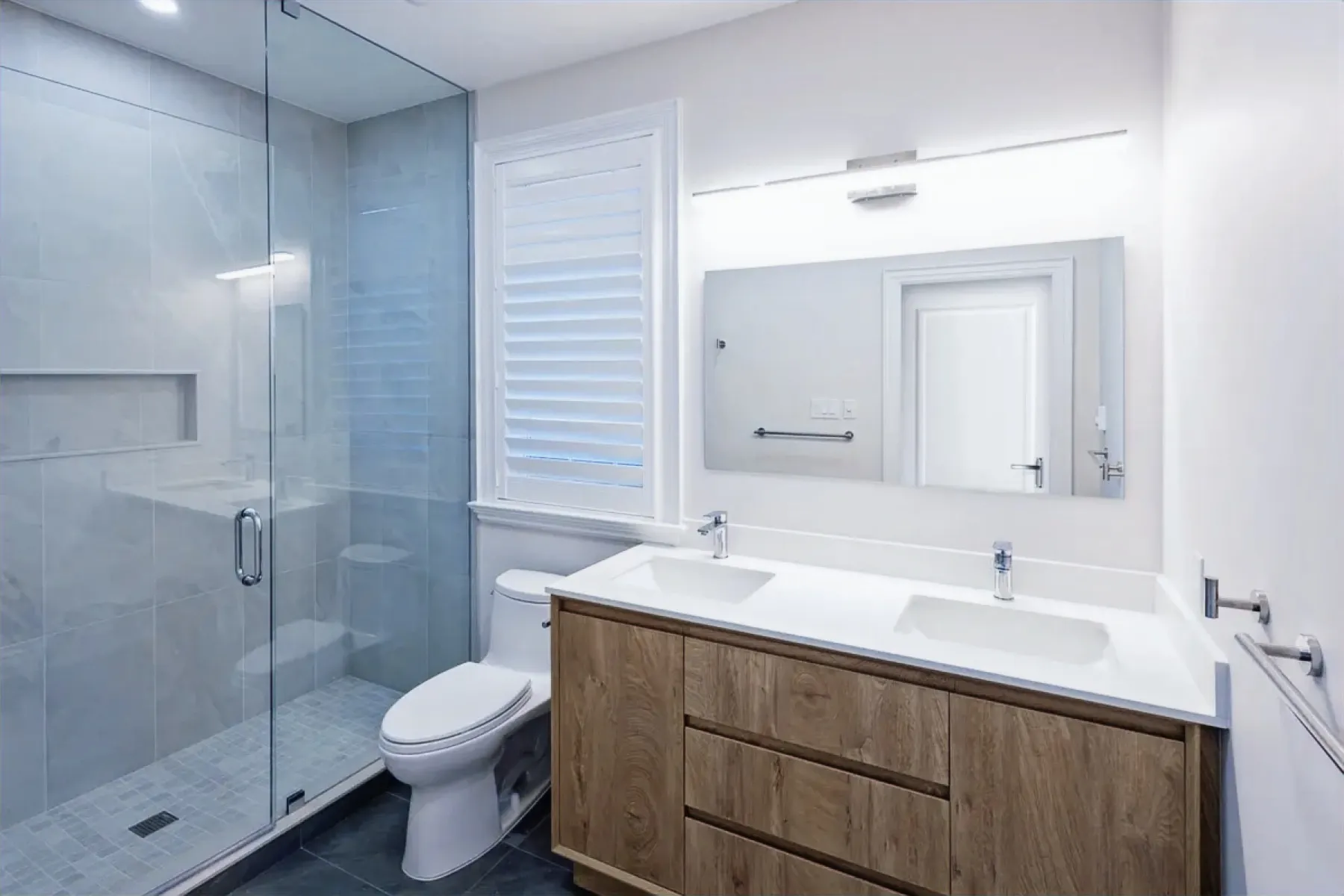
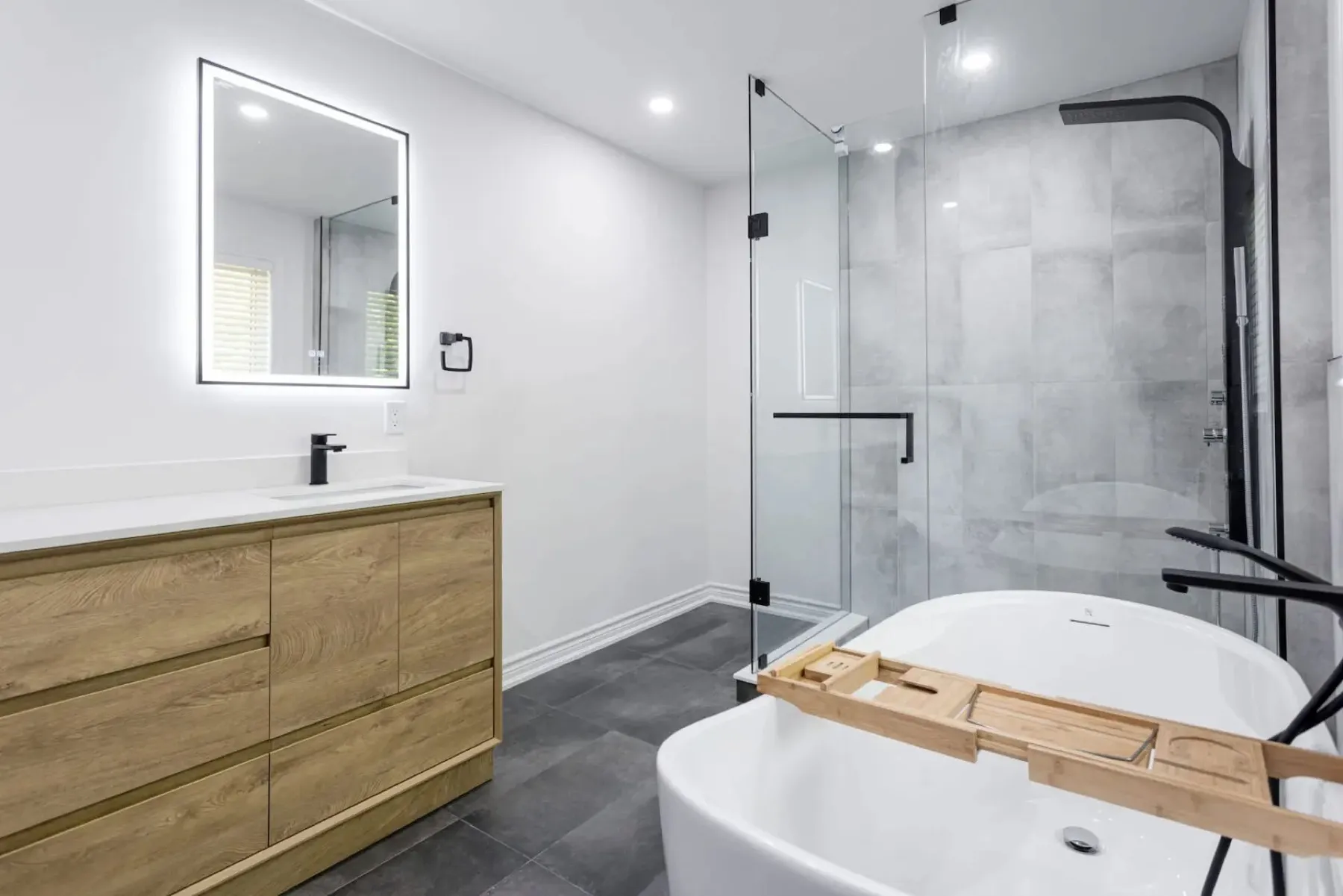
Where the money goes
A full remodel is a chain of trades, and each one needs to be done in the right order:
- Demolition and haul-away: old tile, drywall, fixtures and debris out.
- Plumbing rough-in: new supply lines, valves and drains, often replacing old galvanized pipe while the walls are open.
- Electrical: GFCI-protected outlets, lighting, and a circuit for the exhaust fan or heated floor.
- Ventilation: an exhaust fan that vents to the outside.
- Waterproofing: a membrane behind the tile and a flood-tested shower pan.
- Tile and stone: floors, shower walls, niches and trim.
- Vanity, fixtures and glass: cabinets, counters, toilet, faucets, shower glass and mirrors.
- Paint, inspection and punch list.
What drives the cost up (or down)
Moving plumbing
Keeping the toilet, shower drain and sink in the same spots is the single biggest way to control cost. Moving them means new drain lines, sometimes cutting into the slab or floor framing, and more inspection steps.
Layout and structural changes
Removing a wall, enlarging the room or swapping a tub for a walk-in shower can require new framing, a larger drain and electrical changes.
Tile size and pattern
Large-format tile, herringbone or other patterns, mosaic niches and floor-to-ceiling tile all add installation time. A simple layout in a quality tile often looks just as good for less.
Fixtures and finishes
Freestanding tubs, thermostatic valves, body sprays, custom vanities and frameless glass add up quickly. Mid-range fixtures from reputable brands usually last just as long as luxury lines.
Hidden conditions
Rotted subfloor, old cast-iron drains, leaks inside walls or outdated wiring often show up during demolition, especially in homes built before the 1980s. A good estimate includes an allowance for this.
Rules that affect your budget in California
- Permits. Changing plumbing, electrical, ventilation or walls needs a permit. In the City of Los Angeles that’s LADBS; other cities have their own building departments.
- Water-saving fixtures. California sets maximum flow rates, so new toilets, showerheads and faucets must meet them. In older homes, a permitted remodel is also the point where non-compliant fixtures get replaced.
- Ventilation. California’s building code requires bathroom exhaust fans that vent outside, and in new or remodeled bathrooms they’re typically humidity-controlled.
- Safety. Outlets near water must be GFCI-protected, and shower glass must be tempered safety glass.
These aren’t optional extras, so make sure every bid includes them.
Why the cheapest bid often costs more
The lowest number on paper often leaves things out: no permit, a thin waterproofing layer, no allowance for hidden damage, or unlicensed help. The bathroom may look fine on day one, but common results are:
- Water damage behind or under the shower
- Mold from poor ventilation
- Cracked or loose tile
- A failed inspection when you sell
- Paying to tear it out and rebuild
How long a bathroom remodel takes
| Phase | Typical time |
|---|---|
| Design, layout and selections | 1–3 weeks |
| Permit | 1–3 weeks (often overlaps with design) |
| Ordering materials | 1–4 weeks, depending on vanity, glass and tile |
| Construction | 4–6 weeks for a full remodel |
The fastest projects are the ones where every material is on site before demolition starts. That way the crew never waits for a backordered vanity or the shower glass.
How to set a budget that holds
There are two good ways to start:
- Wish list first. Write down everything you’d want, then rank it. Your contractor prices the full list and you trim from the bottom.
- Budget first. Pick a number you’re comfortable with and design the most value into it: keep the layout, spend on tile and fixtures you touch every day.
Either way, set aside 10–15% as a contingency for surprises behind the walls, especially in older homes.
Checklist before you sign
- The estimate lists demolition, plumbing, electrical, ventilation, waterproofing, tile, fixtures, glass and paint.
- The permit is included and the contractor pulls it.
- There’s a written schedule and a materials list with allowances.
- The contractor is licensed with the CSLB, and you’ve checked the number.
- You know who is supervising the job day to day.
For more planning help, see our bathroom remodeling page, real examples in our project gallery, and our guide to the biggest bathroom remodeling mistakes.
Sources
- LADBS: Permits for home improvement projects
- California Energy Commission: Title 20 appliance efficiency (water fixtures)
Program details change. We check them before every estimate.