Blog HVAC
Heat Pump vs. AC and Gas Furnace in the San Fernando Valley
Should you replace an aging AC and gas furnace with a heat pump? Here is the honest cost math for Valley homes, how comfort compares, and which rebates can lower the price.
Key takeaways
- One system, two jobs: a heat pump cools in summer and heats in winter, so it replaces both the AC and the gas furnace.
- Heating cost is close: at typical Valley rates, a heat pump's cost per unit of heat is roughly even with a 95% gas furnace. The bigger savings come from efficient cooling.
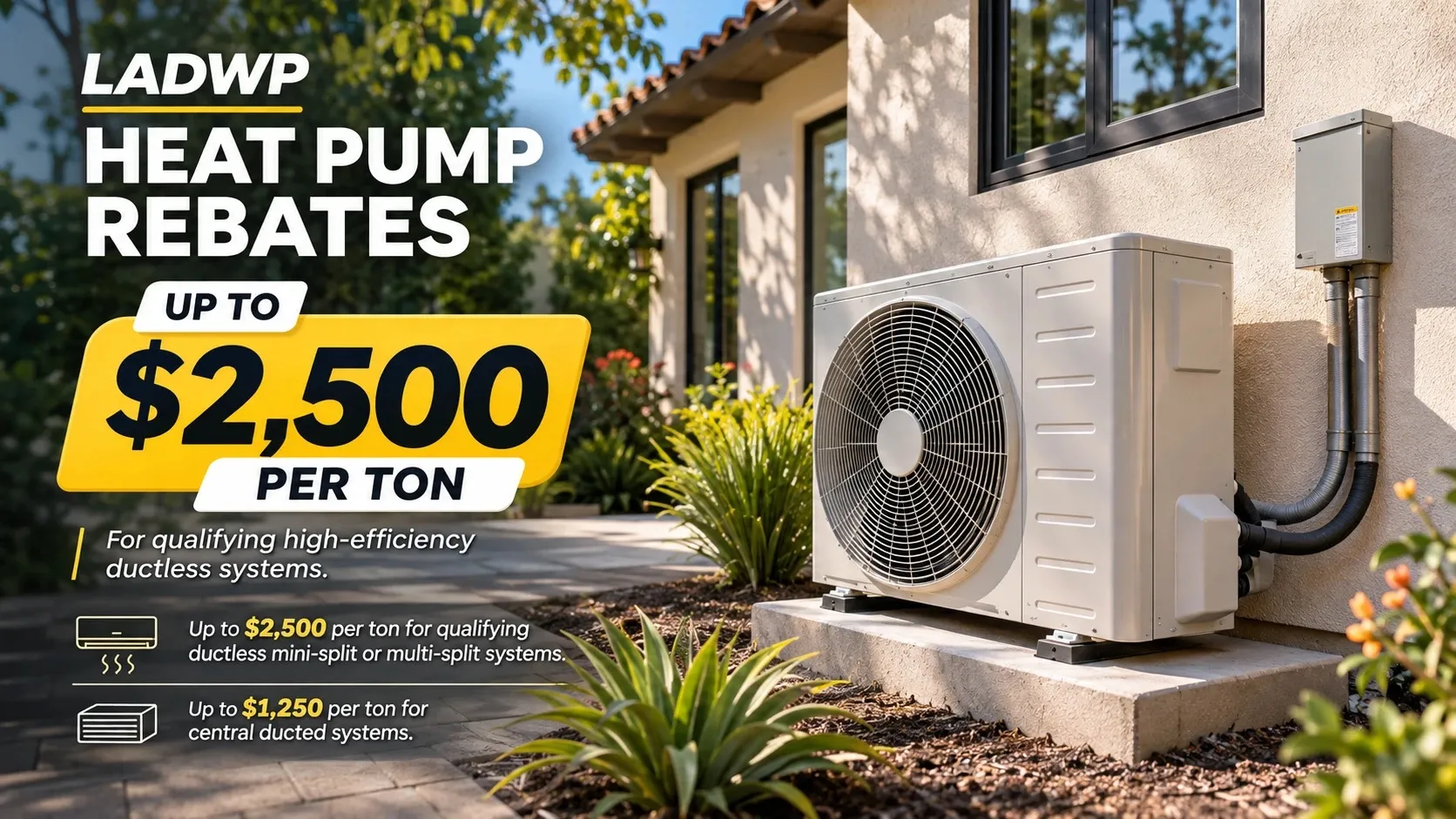
- Rebates change the math: TECH Clean California offers $2,000 to $5,000 for heat pump HVAC in 39 Valley ZIPs, and LADWP offers up to $1,250 per ton for ducted systems.
- Timing: TECH requires your contract, permit and install to be dated November 2, 2026 or later.
If your AC is 15 years old and your furnace is older, you are probably deciding between two things: replace both like for like, or switch to one heat pump that does both jobs. In the Valley, where summers are long and winters are short, the answer is not the same as it would be in a cold climate.
The timing also matters. New Valley incentives opened on November 2, 2026, and they only apply to projects started after that date. Here is a plain comparison so you can decide with real numbers.
What is the difference?
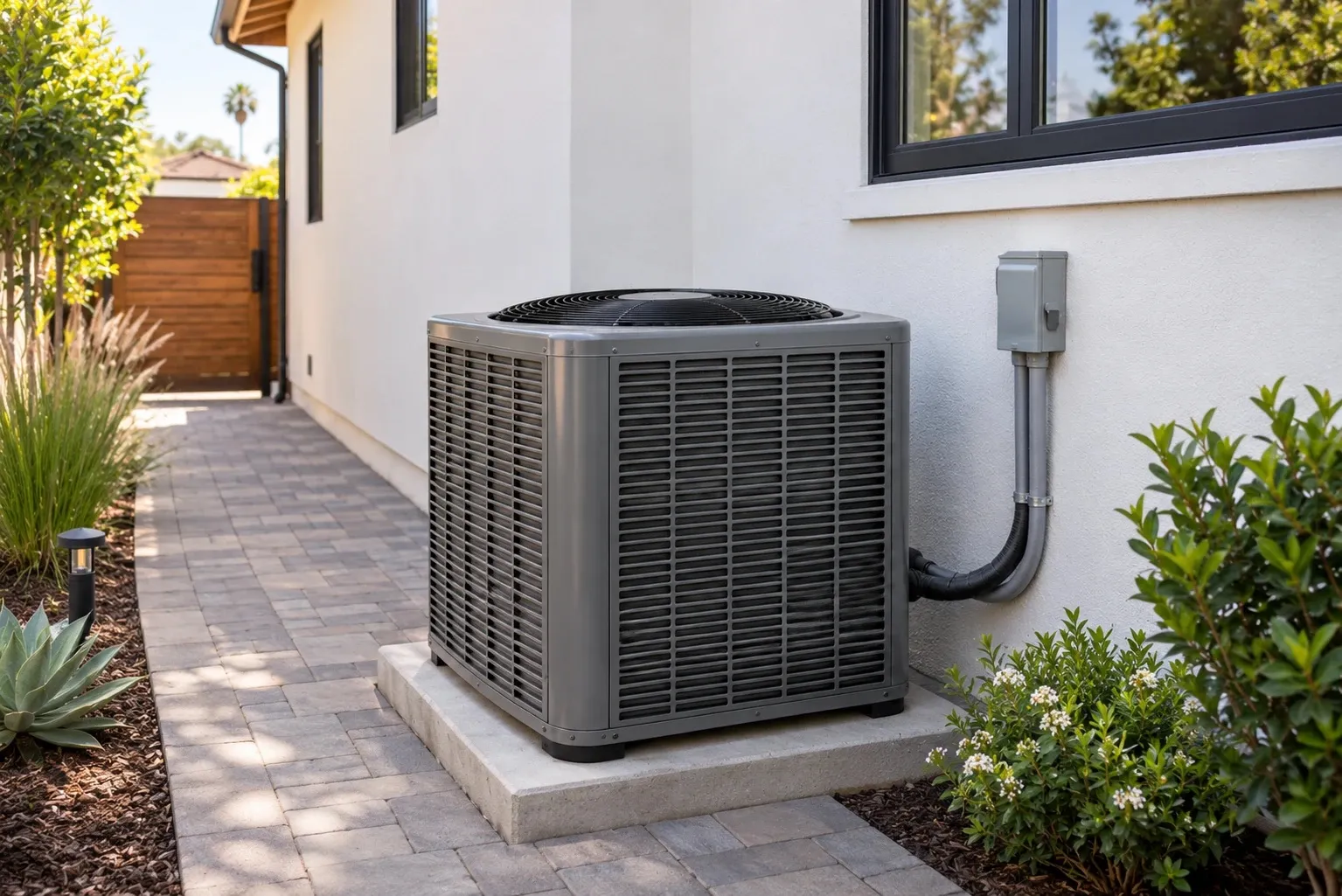
A traditional setup has two machines: an outdoor air conditioner for cooling and a gas furnace for heating, sharing one set of ducts. A heat pump is a single outdoor unit and indoor coil that moves heat in both directions. In summer it works like an AC. In winter it pulls heat from outdoor air and moves it inside.
Because it moves heat instead of burning gas, it delivers more heat energy than the electricity it uses. That ratio is called the COP. Typical seasonal values are about 2.5 to 3.5, meaning 2.5 to 3.5 units of heat for each unit of electricity.
How do running costs compare?
Here is a simple comparison you can redo with your own bills. One therm of gas holds 100,000 Btu, which equals about 29.3 kWh of heat.
| 95% AFUE gas furnace | Heat pump, COP 3 | Heat pump, COP 3.5 | |
|---|---|---|---|
| Energy used per therm of heat delivered | 1.05 therms | 9.8 kWh | 8.4 kWh |
| Cost at $2.10/therm gas | $2.21 | n/a | n/a |
| Cost at $0.25/kWh electricity | n/a | $2.44 | $2.09 |
| Cost at $0.30/kWh electricity | n/a | $2.93 | $2.51 |
SoCalGas reported a bundled residential average of $2.10 per therm in its March 2026 rate alert. The electricity prices and COP values are illustrative assumptions for this example, not a promise. LADWP uses tiered rates, so your cost depends on how much you use. Check your own bill.
Where the savings actually come from
Valley homes use air conditioning far more than heat. A new heat pump has a high cooling efficiency (SEER2) rating, so the summer savings over an old, low-efficiency AC can be real. You also maintain one system, not two, and you can retire your gas line to the furnace.
How does comfort compare?
- Even temperatures: variable-speed heat pumps run longer at lower output, which avoids the hot-blast, then off pattern.
- Quieter: many models are quieter outside than older condensers.
- Dry-air feel: heat pump air is warm, not hot, so it may feel less intense than a furnace. That is normal.
- Ducts matter: leaky or undersized ducts hurt any system. We check this during a visit to your home.
Which Valley homes does this fit?
TECH Clean California’s incentive covers 39 ZIP codes. Here are examples:
| Neighborhood | Eligible ZIP codes |
|---|---|
| Northridge | 91324, 91325, 91330 |
| Granada Hills | 91344 |
| Porter Ranch | 91326 |
| Reseda | 91335 |
| Van Nuys & Lake Balboa | 91401, 91405, 91406, 91411 |
| Sherman Oaks | 91403, 91423 |
| Encino | 91316, 91436 |
Homes outside these ZIPs, such as Tarzana or Woodland Hills, can still use LADWP’s own rebate. The rest of the Valley is expected to join the TECH program in 2027, pending funding.
What rebates are available?
TECH Clean California
Single-family homes in the eligible ZIPs can receive $2,000 to $5,000 for heat pump HVAC. Income-qualified households (below 80% of the Los Angeles County median income) receive larger amounts. Funding is first come, first served, and the contractor submits the reservation. Your contract, permit and installation must be dated November 2, 2026 or later.
LADWP
LADWP pays up to $2,500 per ton, based on the equipment’s SEER2 and HSPF2 ratings. For central ducted systems, the range is $1,000 to $1,250 per ton. For ductless systems it is $1,500 to $2,500 per ton. You apply after installation, within 12 months, with your invoice, AHRI certificate and final permit. LADWP’s rebate excludes ADUs and new construction.
A worked example
Say you install a 3-ton ducted heat pump that qualifies for the $1,100 per ton LADWP tier. That is 3 x $1,100 = $3,300 from LADWP. On top, a general-market home in an eligible ZIP can receive $2,000 to $5,000 from TECH. Together they cannot exceed your project cost, and TECH counts other incentives first, so your contractor should confirm the final numbers before you sign.
When should you stay with gas?
A heat pump may not be the best choice right now if:
- Your furnace and AC are only a few years old and working well.
- Your electrical panel would need major work and you are outside the incentive area.
- Your ducts are in poor condition and a full duct replacement is out of budget.
Questions to ask before you sign
- Is the contractor enrolled with TECH Clean California?
- What are the SEER2 and HSPF2 ratings, and which LADWP tier do they hit?
- Will the thermostat qualify for LADWP’s Power Savers program, which TECH asks LADWP customers to join when it is compatible?
- Does the quote include the permit and any panel work?
The short version
Heat pumps are a strong replacement when your AC or furnace is due, mostly because of efficient cooling, one system to maintain and rebates that can cover a large part of the cost. Heating costs alone are roughly even with gas.
Related reading: Heat pump rebates in the San Fernando Valley, LADWP heat pump rebate per ton, our heat pump HVAC service and the full rebate directory.
Sources
- TECH Clean California: San Fernando Valley Residential Incentives
- LADWP: Consumer Rebate Program (heat pump HVAC)
- SoCalGas: Rate Alert for March 2026
Program details change. We check them before every estimate.